Reliable dosing technology for one of Africa's largest desalination plants
The Challenge
One of Africa’s largest seawater desalination plants was to be built for the Agadir region, with a planned capacity of up to 450,000 m³ of drinking water per day. Such plants can only function if the pretreatment of the seawater and the membrane cleaning in the reverse osmosis system operate with absolute stability and reproducibility. Fluctuating water quality, biofouling, scaling, or incorrectly dosed chemicals directly jeopardize availability, membrane service life, and operating costs. At the same time, different media must be dosed in precisely defined quantities at dozens of process points. Without a consistently reliable, scalable dosing system, the economical and safe operation of this plant would not be possible.
The sera Solution
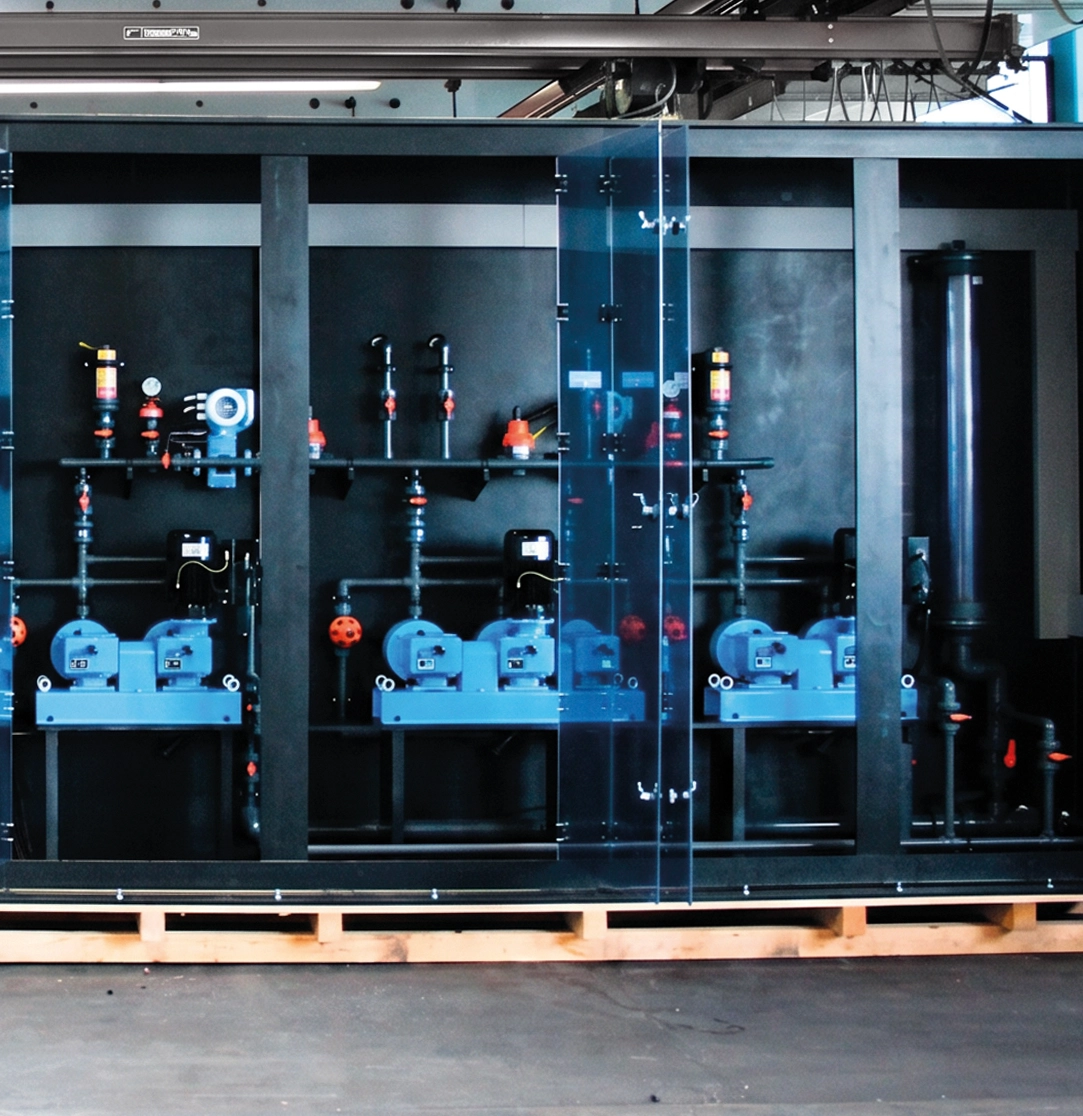
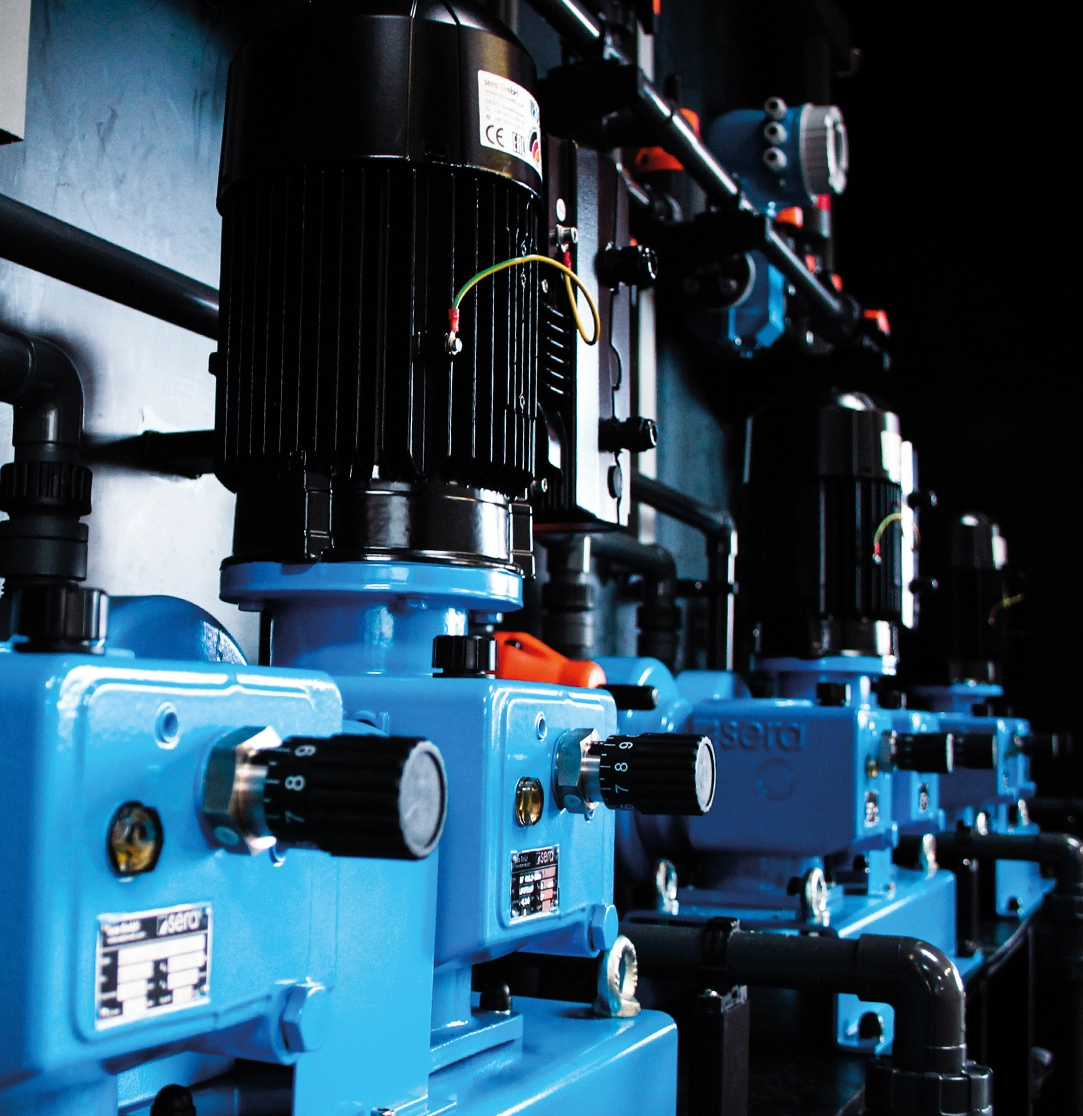
sera implemented a comprehensive, custom-designed dosing and pumping system for the plant in Agadir, covering nearly all chemical process steps in water treatment and membrane cleaning. A total of 17 dosing systems were installed in 25 PE control cabinets, equipped with 77 pumps as well as several hundred valves, fittings, and piping. The systems dose, among other things, sodium hypochlorite, sodium hydroxide, sulfuric acid, antiscalant, and bisulfite at the respective critical points of pretreatment, reverse osmosis, and CIP cleaning. Engineering and project management were carried out in close collaboration between the Spanish sera branch and the headquarters in Immenhausen. The result is a scalable, reliable overall system for one of the largest desalination plants on the continent.
Customer Benefits
- Stable and reproducible pretreatment of seawater for reverse osmosis
- Protection of the membranes against biofouling, scaling, and chemical overload
- Reliable operation of a plant with a throughput of up to 450,000 m³/day
- Technical foundation for long service life, minimal downtime, and controllable operating costs
Summary
The project demonstrates that large-scale desalination plants fail not because of membranes, but due to unstable chemical dosing—and that reliable dosing technology is crucial precisely in this context.