sera compressors in Germany's first energy self-sufficient commercial building
The Challenge
The new headquarters of the heating and plumbing company Küpper in Meckenheim was designed to meet most of its own energy needs. The goal was not only to use electricity from photovoltaics directly but also to make it storable seasonally to ensure supply security and stable energy costs. Conventional battery storage systems are insufficient for these periods. To achieve this, excess electricity had to be converted into hydrogen, stored safely, and converted back into electricity and heat as needed. A key requirement was reliable and low-maintenance hydrogen compression.
The sera Solution
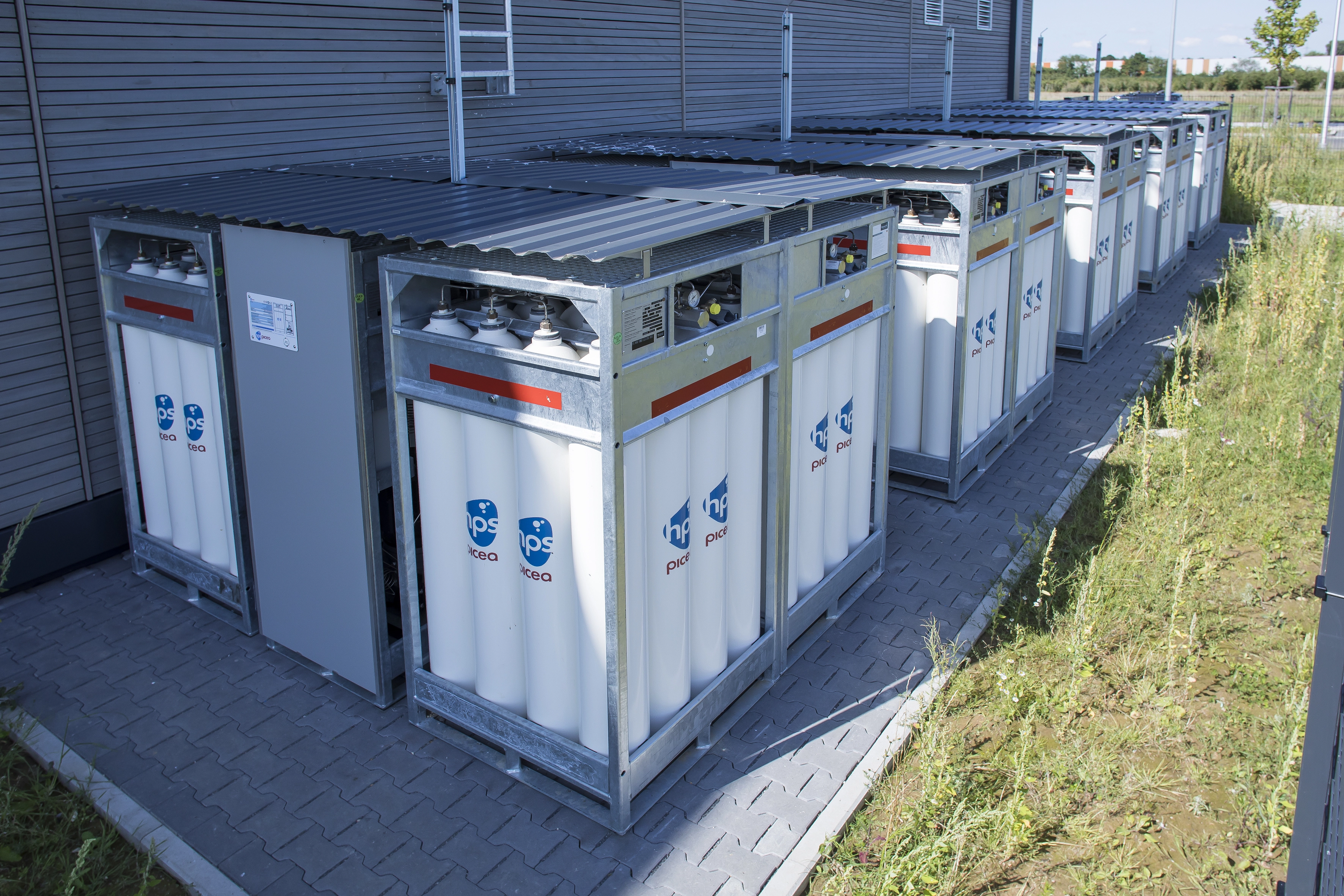
Five picea energy systems from HPS were installed in the building, each equipped with a sera compressor. Excess PV electricity is converted into hydrogen via electrolysis. The dry-running, hermetic piston compressor Agility from sera compresses the hydrogen from approximately 20–30 bar up to 300 bar and feeds it into a cylinder bank. There, the hydrogen can be stored indefinitely and converted back into electricity and heat in the winter via a fuel cell. The oil- and grease-free, hermetically sealed design ensures that the process operates with low maintenance and high reliability.
Customer Benefits
- Energy-self-sufficient operation of the commercial building with seasonal energy storage
- Total storage capacity: approx. 7,500 kWh in the form of hydrogen
- Reduced external electricity consumption to exceptional cases
- Low-maintenance and quiet compression as an integral part of the system
Brief summary
The project in Meckenheim demonstrates how renewable electricity can be stored seasonally with hydrogen and made economically viable in commercial buildings—with reliable compression as a central component.